Generative AI: A Complete Beginner’s Guide
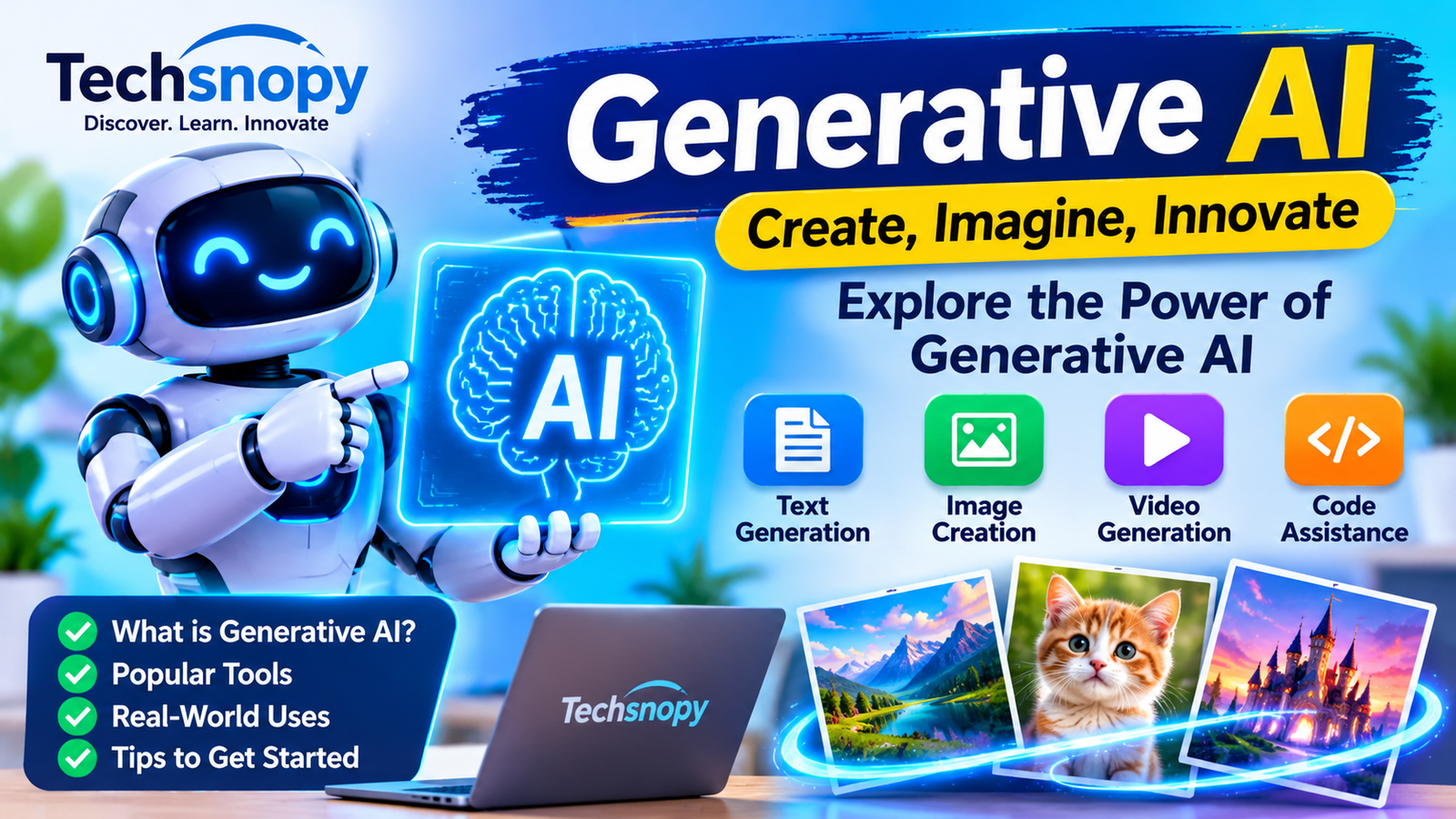
Welcome to Techsnopy’s Generative AI guide! Generative Artificial Intelligence is one of the most exciting developments in modern technology. It allows computers to create new content, including text, images, videos, music, and computer code.
From AI writing assistants to image generators, generative AI is changing how people learn, work, create, and do business.
In this guide, you’ll discover how generative AI works, explore popular tools, understand its benefits and limitations, and learn practical ways to use it responsibly.
What Is Generative AI?
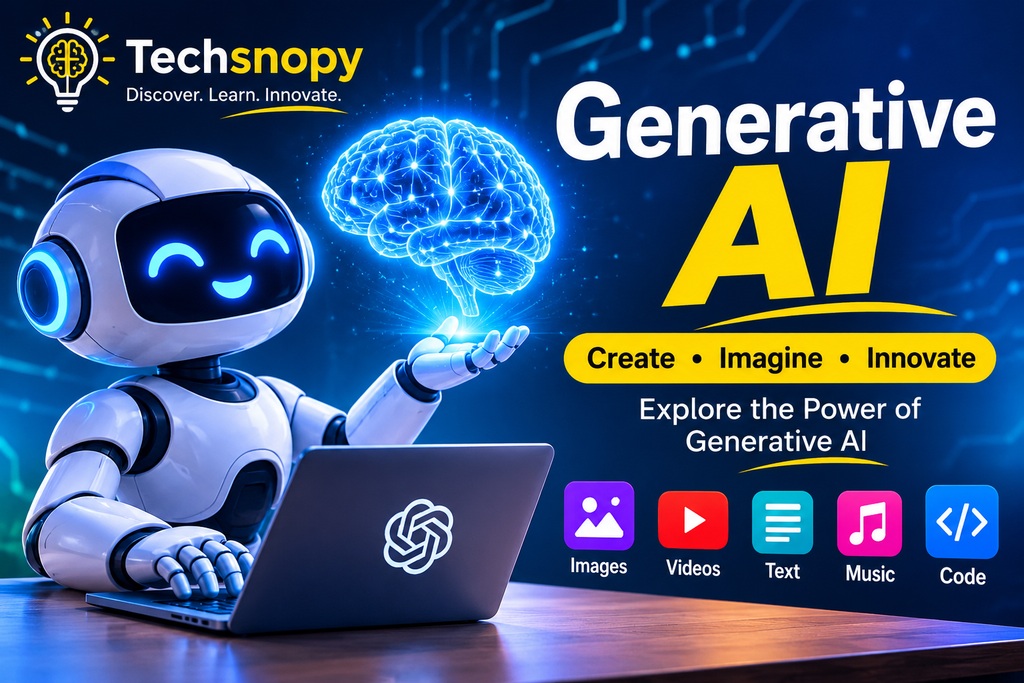
Generative AI is a type of artificial intelligence that can create new content by learning patterns from existing data.
Unlike traditional AI systems that mainly classify information or make predictions, generative AI produces original outputs such as written articles, images, videos, music, and computer code.
For example:
- ChatGPT can generate text and answer questions.
- Image-generation tools can create pictures from written descriptions.
- AI video tools can produce videos from prompts.
- AI coding assistants can suggest and generate computer code.
Generative AI is becoming useful for students, creators, professionals, and businesses across many industries.
How Does Generative AI Work?
Generative AI works by using machine learning models trained on large amounts of data. These models learn patterns, relationships, and structures that help them generate new content.
The basic process involves four steps:
1. Data Collection
The AI model is trained using large datasets containing text, images, audio, video, or other information.
2. Model Training
The model analyses the training data and learns patterns and relationships within it.
3. User Prompts
Users provide instructions or questions, commonly called prompts, to tell the AI what they want.
4. Content Generation
The AI model processes the prompt and generates an output based on what it has learned.
The quality of the result often depends on the model, the available information, and how clearly the user describes the task.
Types of Generative AI
Generative AI can create different types of digital content depending on the model and technology being used.
1. Text Generation
Text-generation AI creates articles, summaries, emails, explanations, and other written content. ChatGPT and Google Gemini are examples.
2. Image Generation
Image-generation AI creates pictures, illustrations, and designs from written prompts.
3. Video Generation
AI video-generation tools can create or edit videos using text descriptions, images, or existing video footage.
4. Audio and Music Generation
Audio-generation AI can produce speech, sound effects, voiceovers, and music.
5. Code Generation
AI coding tools can help developers write, explain, test, and improve computer code.
These technologies are opening new possibilities for creativity, education, productivity, and business.
Popular Generative AI Tools
Many generative AI tools are available to help users create content, improve productivity, and explore new ideas. Some offer free plans, while others require paid subscriptions for advanced features.
1. ChatGPT
ChatGPT can generate text, explain complex topics, brainstorm ideas, assist with coding, and help with everyday tasks.
2. Google Gemini
Google Gemini can assist with writing, research, brainstorming, and understanding information.
3. Microsoft Copilot
Microsoft Copilot helps users generate content, explore information, and complete productivity tasks.
4. Canva AI
Canva AI provides creative features for generating designs, images, presentations, and other visual content.
5. Adobe Firefly
Adobe Firefly offers generative AI features for creating and editing images and other creative assets.
6. Runway
Runway provides AI-powered creative tools for video generation and editing.
How to Choose a Generative AI Tool
Before choosing a tool, compare its features, pricing, usage limits, privacy policies, and commercial-use terms. Start with free options when possible and select tools that match your actual needs.
Real-World Applications of Generative AI
Generative AI is being used across different industries to improve creativity, productivity, and digital services.
1. Content Creation
Writers and content creators can use AI to brainstorm ideas, prepare outlines, summarise information, and develop first drafts.
2. Education and Learning
AI can explain difficult subjects, create practice questions, and help students understand new concepts.
3. Marketing and Advertising
Businesses can use generative AI to develop campaign ideas, draft promotional content, and create visual concepts.
4. Graphic Design
Designers can explore creative ideas, generate images, and develop visual concepts with AI-powered tools.
5. Software Development
Developers can use AI assistants to generate code suggestions, explain programming concepts, and identify possible errors.
6. Business Productivity
Businesses can use generative AI to draft emails, prepare reports, organise information, and support everyday workflows.
Generative AI can save time, but its output should always be reviewed for accuracy, originality, and suitability before publication or commercial use.
Benefits of Generative AI
Generative AI offers several advantages for individuals, creators, students, and businesses.
1. Saves Time
AI can help create first drafts, summaries, ideas, and other content more quickly.
2. Encourages Creativity
Generative AI can help users explore new ideas, designs, stories, and creative possibilities.
3. Improves Productivity
AI tools can assist with routine writing, research, planning, and other everyday tasks.
4. Supports Learning
Students and beginners can use AI to understand difficult concepts and explore new subjects.
5. Helps Businesses
Businesses can use generative AI to support customer communication, marketing, research, and internal workflows.
6. Makes Technology More Accessible
How to Use Generative AI Effectively
Generative AI can be more useful when you give it clear instructions and review the content it creates. Follow these simple tips to get better results.
1. Write Clear Prompts
Explain exactly what you want the AI tool to do. Include the topic, purpose, and preferred format.
2. Provide Useful Context
Share relevant background information so the AI can understand your needs and give more suitable answers.
3. Choose the Right Tool
Different tools are designed for different tasks. Some are better for writing, while others focus on images, videos, audio, or coding.
4. Review the Results
Always check AI-generated content for accuracy, clarity, originality, and possible errors before using it.
5. Protect Personal Information
Avoid sharing passwords, private documents, financial details, or other sensitive information with AI tools.
6. Use AI Alongside Human Creativity
Treat generative AI as an assistant, not a replacement for your own knowledge, judgment, and creativity.
Example: Instead of asking an AI tool to “write about technology,” try asking it to “write a beginner-friendly 500-word article explaining five ways artificial intelligence is used in everyday life.”
Generative AI works best as an assistant that supports human creativity, knowledge, and decision-making.
Risks and Limitations of Generative AI
Although generative AI offers many opportunities, users should understand its limitations and use it responsibly.
1. Inaccurate Information
Generative AI can produce incorrect facts or misleading answers. Always verify important information using reliable sources.
2. Copyright and Ownership Concerns
AI-generated content can raise questions about copyright, ownership, and permitted commercial use. Check the applicable terms and laws before using generated material commercially.
3. Privacy and Data Security
Avoid entering passwords, financial information, confidential business data, or other sensitive personal details into AI tools.
4. Bias in AI Outputs
AI-generated content can reflect biases present in its training data, potentially resulting in unfair or misleading outputs.
5. Deepfakes and Misinformation
AI can generate realistic images, audio, and videos that may be used to spread false information or impersonate people.
6. Dependence on AI
Relying too heavily on AI can reduce opportunities to practise independent thinking, research, and problem-solving.
Responsible Use of Generative AI
Use AI as a supporting tool rather than an unquestioned source of truth. Review its output, verify facts, respect intellectual property, and disclose AI assistance when required.
Frequently Asked Questions About Generative AI
1. What is Generative AI in simple words?
Generative AI is a type of artificial intelligence that creates new content, such as text, images, videos, music, and computer code.
2. Is Generative AI free to use?
Some generative AI tools offer free versions, while others require a paid subscription for advanced features or higher usage limits.
3. Can beginners use Generative AI?
Yes. Many tools are designed with simple interfaces that allow beginners to create content by entering everyday language instructions.
4. What are some popular Generative AI tools?
Popular examples include ChatGPT, Google Gemini, Microsoft Copilot, Canva AI, Adobe Firefly, and Runway.
5. Can Generative AI make mistakes?
Yes. It can produce incorrect, incomplete, or misleading information. Always verify important information before relying on it.
6. Will Generative AI replace human creativity?
Generative AI can support creative work, but human ideas, judgment, experience, and originality remain important.
Conclusion
Generative AI is changing how people create content, learn new skills, solve problems, and complete everyday tasks. From writing and image creation to video production and coding, it offers many useful possibilities for individuals and businesses.
However, it is important to understand its limitations, check the information it generates, and use these tools responsibly. Generative AI works best when combined with human knowledge, creativity, and critical thinking.
At Techsnopy, our goal is to help you understand emerging technologies through simple explanations and practical guides. Keep exploring to learn how Generative AI can support your everyday life and work.