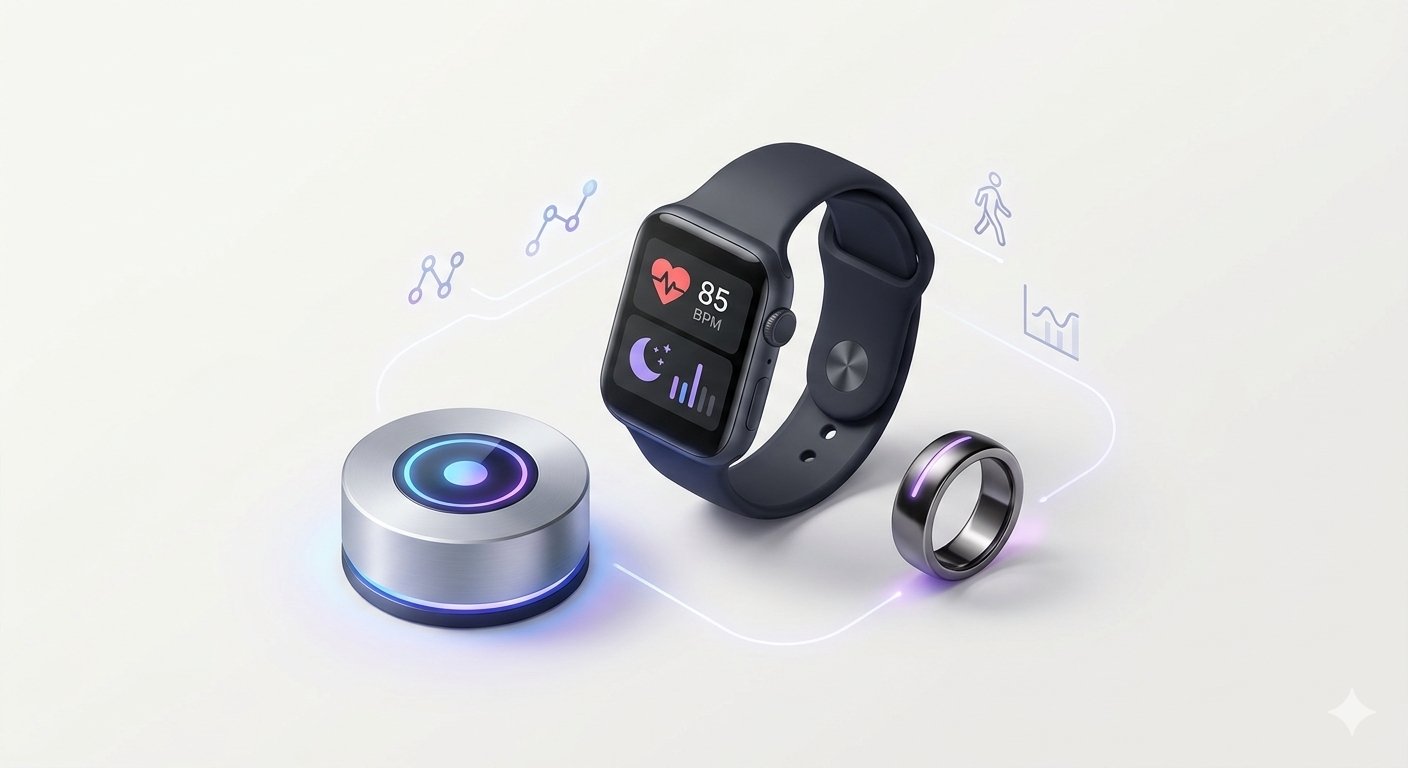
Wearable tech gadgets have quickly become one of the most practical categories in consumer electronics. Instead of sitting on a desk or inside a backpack, wearable devices stay comfortably on your wrist, finger, or ears—quietly tracking your daily movement, sleep quality, heart rate, and notifications without interrupting your routine.
In 2026, advances in low-power optical sensors, compact batteries, and on-device health algorithms have made smartwatches, smart rings, and fitness bands far more accurate and comfortable than early models. For everyday users and beginners, understanding how wearable gadgets work makes it much easier to choose a device that fits your lifestyle and health goals.
What Is Wearable Technology?
Wearable technology refers to lightweight electronic devices designed to be worn directly on the body or integrated into everyday accessories. These gadgets use miniature biometric sensors and Bluetooth connectivity to collect real-time health and activity metrics, syncing them with companion apps on your smartphone.
Why Wearable Gadgets Are So Popular
- Hands-Free Convenience: Check incoming calls, calendar reminders, and navigation prompts with a quick glance at your wrist.
- Continuous Wellness Insights: Track daily steps, resting heart rate, sleep stages, and stress trends automatically around the clock.
- Long Battery Efficiency: Modern wearable processors consume minimal power, allowing fitness trackers and smart rings to run for 5 to 10 days on a single charge.
Top Types of Wearable Tech Gadgets in 2026
1. Smartwatches
Smartwatches act as mini companions to your smartphone. Alongside fitness tracking, they support voice calls, contactless payments, music control, GPS workout mapping, and third-party productivity apps.
- Best For: Users who want both smart notifications and detailed workout tracking on a bright touchscreen display.
2. Smart Rings
Smart rings have surged in popularity because they offer discreet, screen-free health monitoring in a lightweight titanium or ceramic ring. Without a glowing screen to distract you at night, smart rings excel at tracking sleep cycles, body temperature trends, and overnight recovery.
- Best For: Minimalists, people who prefer wearing traditional mechanical watches, and users focused primarily on sleep and recovery metrics.
3. Fitness Bands and Activity Trackers
Slimmer and more affordable than full smartwatches, fitness bands focus on core health essentials such as step counting, heart rate alerts, calorie estimates, and basic message notifications.
- Best For: Beginners, students, and budget-conscious buyers looking for lightweight all-day comfort and week-long battery life.
4. Smart Audio Wearables (Open-Ear and Bone-Conduction Headphones)
Designed for runners, cyclists, and office workers, open-ear wearables deliver clear audio while keeping your ears open to surrounding traffic or conversations.
- Best For: Outdoor workouts, safe commuting, and all-day calls without ear fatigue.
Key Sensors Inside Modern Wearable Gadgets
- Optical Heart Rate (PPG) Sensors: Use safe green and infrared LED lights on the back of the watch or ring to measure blood flow changes and calculate heart rate and blood oxygen levels.
- Accelerometers and Gyroscopes: Detect three-dimensional body movement to count steps accurately, recognize exercises like running or cycling, and detect sudden falls.
- Skin Temperature Sensors: Monitor subtle overnight temperature shifts that can signal recovery needs or changes in sleep quality.
- Built-In GPS Chips: Record outdoor walking, running, and cycling routes accurately without needing to carry your phone.
Practical Buying Tips Before Choosing a Wearable Gadget
- Check Phone Compatibility First: Verify that the smartwatch or smart ring works smoothly with your smartphone’s operating system (Android or iOS) before purchasing.
- Look for Hidden Subscription Fees: Some wearable brands lock advanced sleep or recovery reports behind monthly app subscriptions, while others include all analytics free of charge.
- Prioritize Comfort and Water Resistance: Choose a device with at least 5ATM water resistance so you never have to worry about rain, sweat, or handwashing.
- Evaluate Realistic Battery Life: If you dislike charging another device every night, pick a fitness tracker or smart ring rated for at least 5 to 7 days per charge.
Frequently Asked Questions (FAQs)
1. Are wearable health gadgets medically accurate?
Wearable gadgets provide reliable wellness trends for heart rate, sleep duration, and daily activity, but they are consumer fitness devices rather than certified medical instruments. Always consult a doctor for medical diagnosis.
2. What is the main difference between a smartwatch and a smart ring?
A smartwatch includes a touchscreen for notifications, apps, and GPS workouts, whereas a smart ring has no screen and focuses on discreet 24/7 sleep, heart rate, and recovery tracking.
3. Do wearable gadgets emit harmful radiation?
No. Wearable devices use ultra-low-power Bluetooth Low Energy (BLE) signals that operate well below international safety limits and are safe for continuous daily wear.
4. How often should I clean my smartwatch or fitness band?
Wipe the back sensors and strap gently once or twice a week with a soft, slightly damp cloth to remove sweat and skin oils so optical sensors stay accurate.
5. Can a smartwatch track sleep and steps without being connected to a phone?
Yes. Modern smartwatches and smart rings store several days of activity and sleep data internally and sync everything automatically the next time they connect to your smartphone via Bluetooth.
Conclusion
Wearable tech gadgets have evolved from simple step counters into intelligent everyday companions that encourage healthier habits and keep essential information within easy reach. By choosing a comfortable, water-resistant device with strong battery life and clear app insights, beginners can get lasting value from wearable technology in 2026.